In the early 20th century, the United States Congress began considering the construction of a canal across Central America that would connect the Atlantic and Pacific Oceans. Such a canal would dramatically reduce travel time for ships and transform global trade.
Before the United States took on the project, France had already attempted to build a canal during the 1880s. The French effort focused on cutting a canal through the Isthmus of Panama. However, after nearly twenty years of work, the project failed. The main reasons were devastating tropical diseases such as malaria and yellow fever, which killed thousands of workers and made construction extremely difficult.
Because of the French failure in Panama, many members of Congress began favoring an alternative route through Nicaragua. Nicaragua appeared to offer several advantages. Its political situation was considered relatively stable, and the presence of Lake Nicaragua suggested a potentially easier engineering solution for building a canal.
However, one man was determined to ensure the canal would still be built in Panama—French engineer Philippe Bunau-Varilla. Bunau-Varilla had worked on the original French canal project and felt personally invested in seeing the canal completed, even if it was by another nation. He also had financial interests tied to the project.
To influence the decision, Bunau-Varilla partnered with American lawyer and lobbyist William Nelson Cromwell. Together, they began lobbying members of Congress to support the Panama route instead of Nicaragua. Convincing Congress, however, was not easy. Nicaragua seemed like the safer and simpler option.
Then Bunau-Varilla had a clever idea.
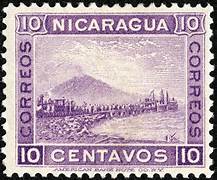
In 1900, the government of Nicaragua issued a postage stamp promoting one of its most famous natural landmarks—Momotombo Volcano. The stamp was meant to attract tourists by highlighting the dramatic volcanic landscape of the country.
Unfortunately, the artist illustrated the volcano with smoke rising from its peak, making it appear active and potentially dangerous.
At the time, public fears about volcanoes were very real. In 1902, a catastrophic eruption of Mount Pelée on the Caribbean island of Martinique killed more than 30,000 people in one of the deadliest volcanic disasters in history.
Taking advantage of this fear, Bunau-Varilla sent a copy of the Nicaraguan stamp to every member of Congress. His message was simple but powerful: Did the United States really want to build a canal near an active volcano?
The visual impact of the stamp, combined with recent memories of the Martinique disaster, helped shift opinion in Washington.
Soon afterward, Congress decided against the Nicaraguan route. Instead, the United States chose to construct the canal through Panama.
The result was the construction of the famous Panama Canal, one of the greatest engineering achievements of the 20th century.
Remarkably, a simple postage stamp played a small but fascinating role in shaping one of the most important infrastructure decisions in world history.